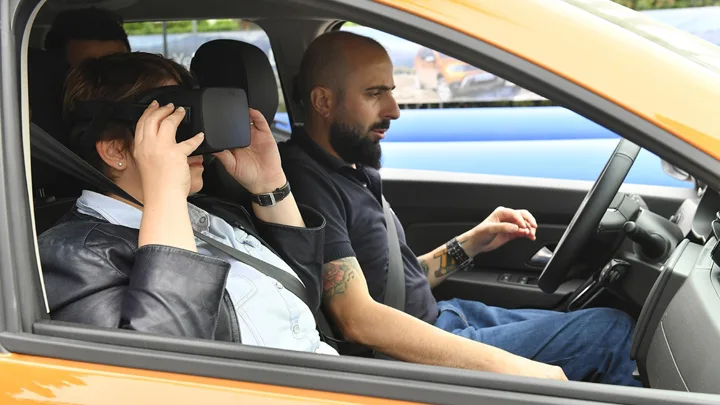


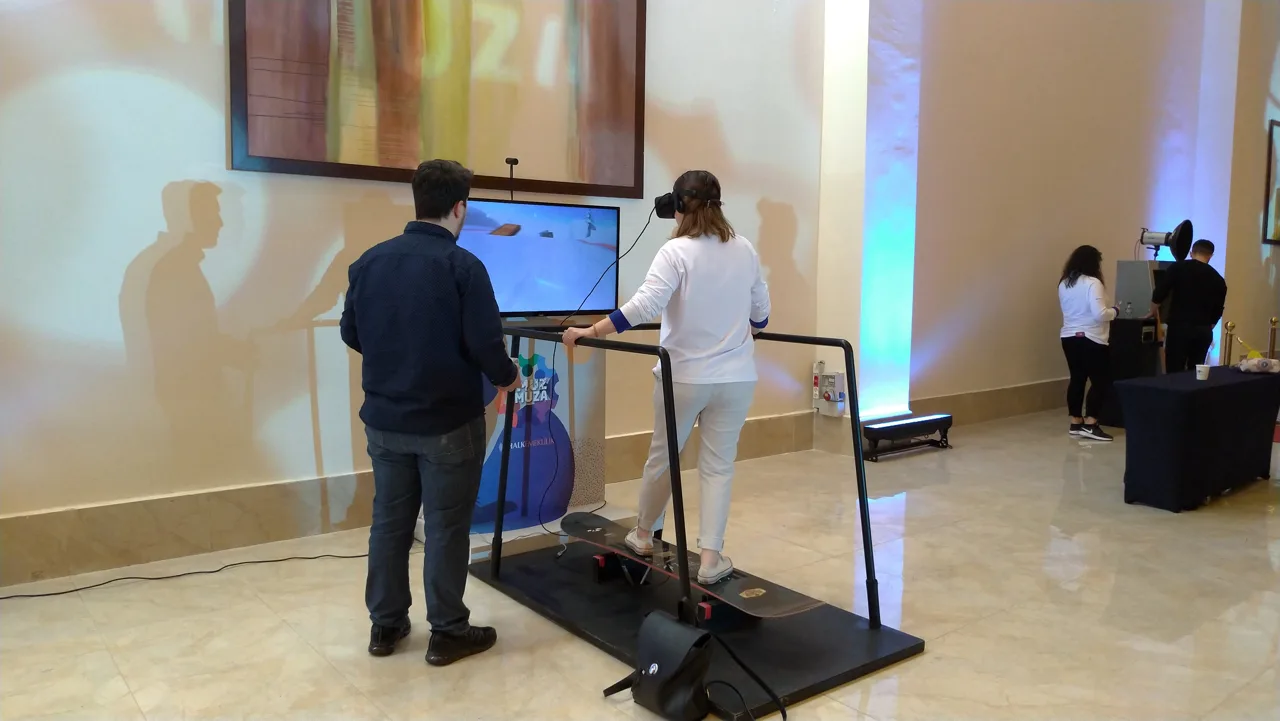
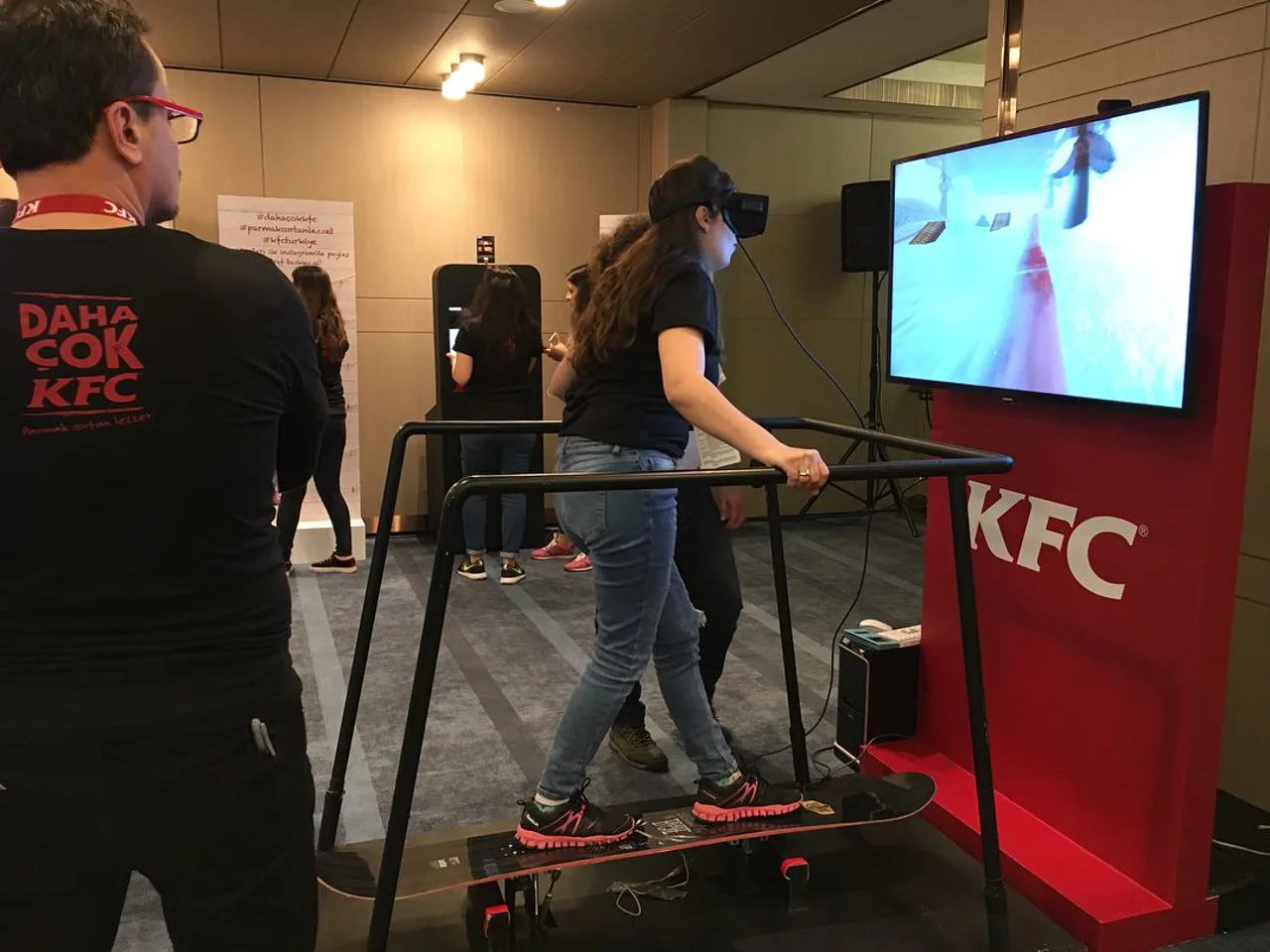
This project involved designing and building a complete VR snowboard simulation experience from the ground up — combining mechanical engineering, electronics, and game development into a single interactive product.
3D Modelling & Mechanical Design
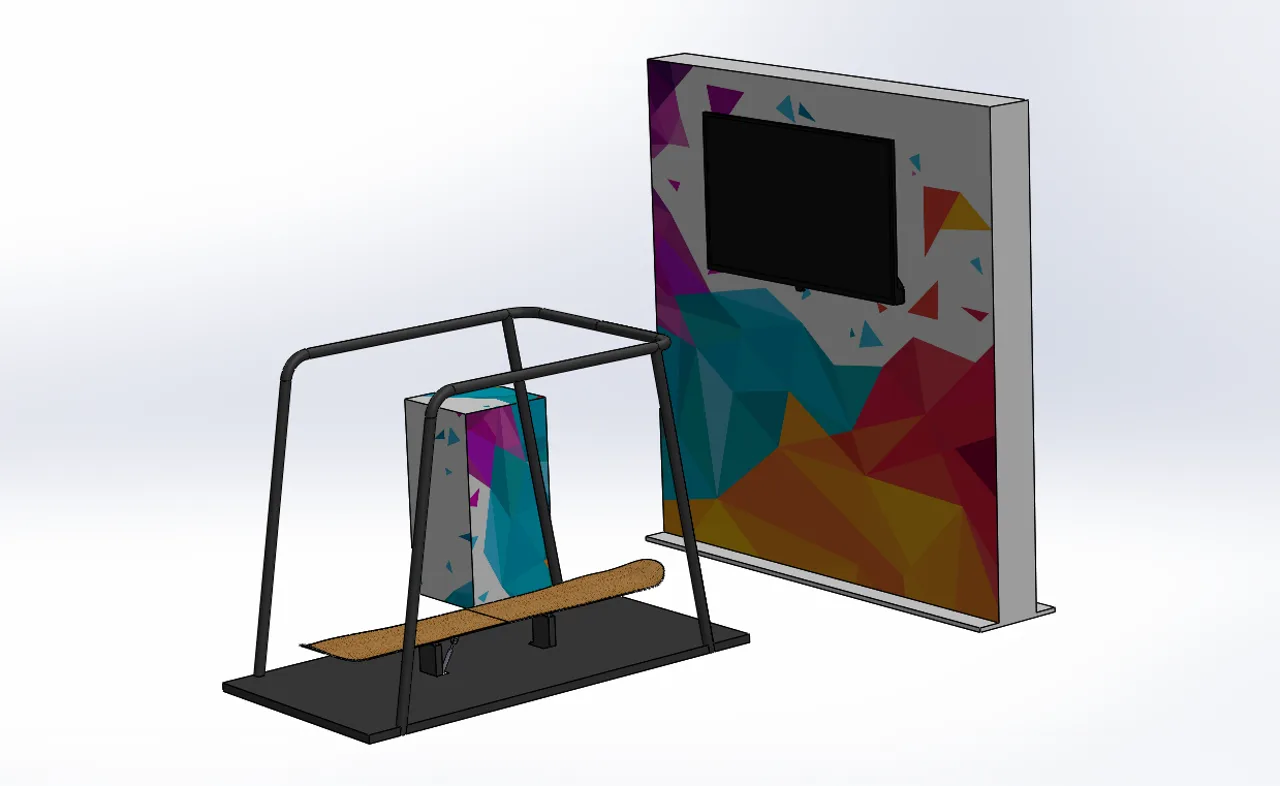
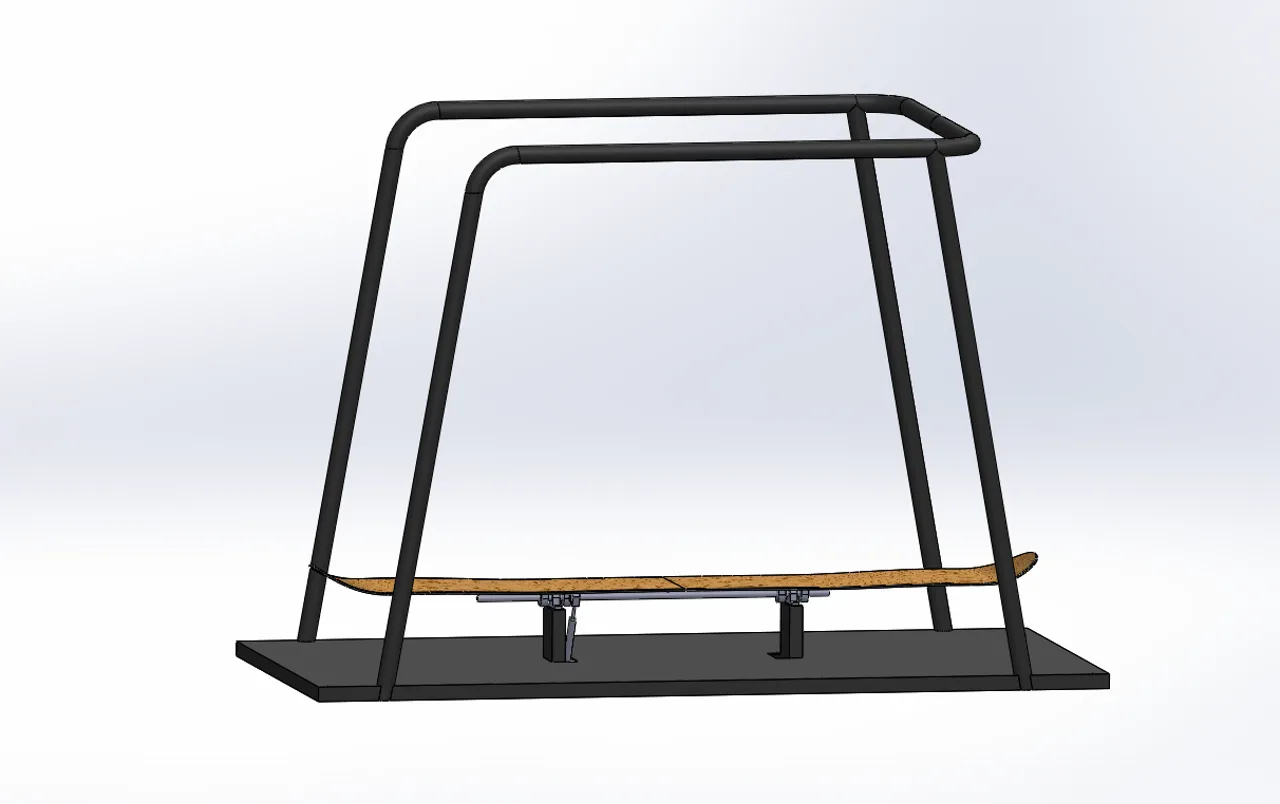
The physical snowboard platform was modelled entirely in SolidWorks. Every component — from the base frame to the mounting brackets — was designed with precision, ensuring structural integrity while keeping the build lightweight enough for event use. Technical drawings were prepared for fabrication.
Custom PCB & Sensor Fusion
I designed a custom electronic circuit board (PCB) featuring a 9-axis gyroscope/accelerometer/magnetometer (IMU) sensor. The raw sensor data from all 9 axes was processed in real-time on the microcontroller to calculate the board's precise orientation and tilt angles. This processed data was then translated into joystick HID commands and sent to the PC via the microcontroller, making the physical board act as a game controller — no additional drivers or software bridges needed.
Unity3D Game Development
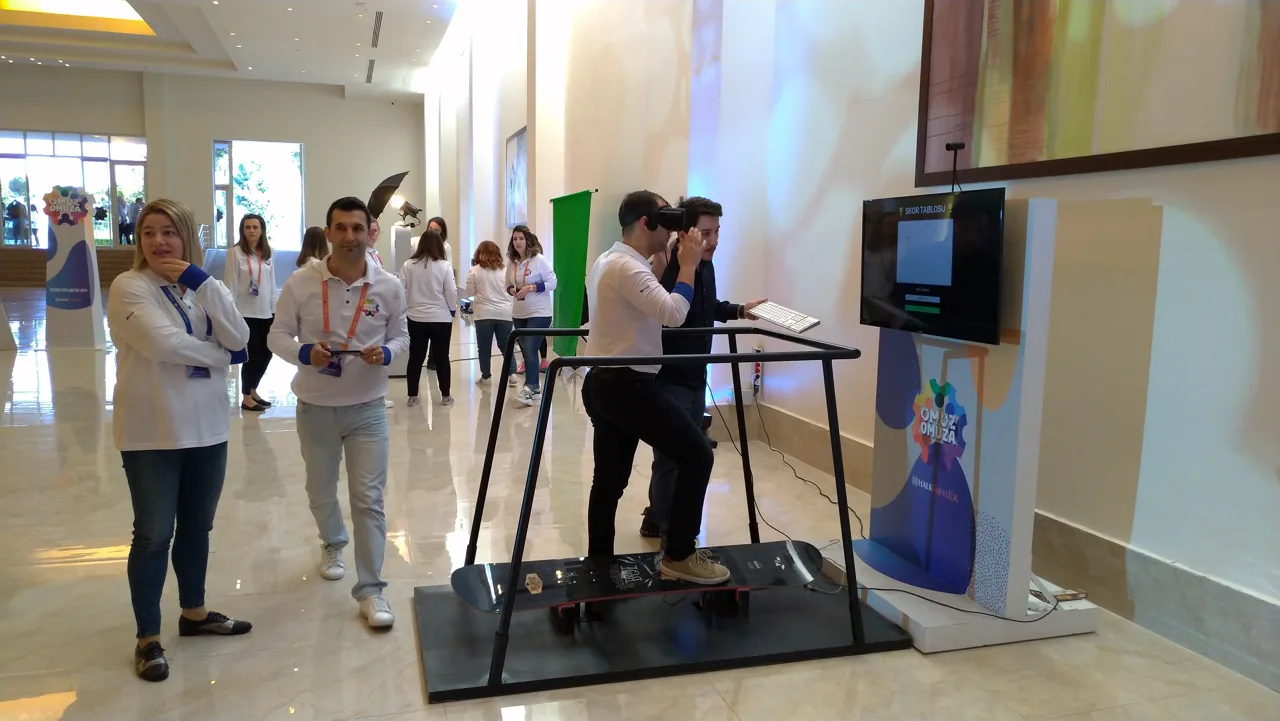
The snowboard game itself was developed in Unity3D. The 3D environment featured a mountain slope with realistic terrain, and the player character responded directly to the physical board's movements. Leaning left or right steered the in-game snowboarder, while forward/backward tilt controlled speed. The game was designed to run smoothly at events, providing an immersive VR snowboard experience for participants.
The Result
A fully integrated, end-to-end interactive experience: step on a real board, lean into turns, and ride down a virtual mountain — all powered by custom hardware and software working together seamlessly.